Quick answer: A backward move in Leela is a predefined board transition, not proof that you have failed. Compare the cell you left, the cell you reached and the answer you gave before the move. Use the contrast to form a testable hypothesis and one reversible action rather than a negative verdict.
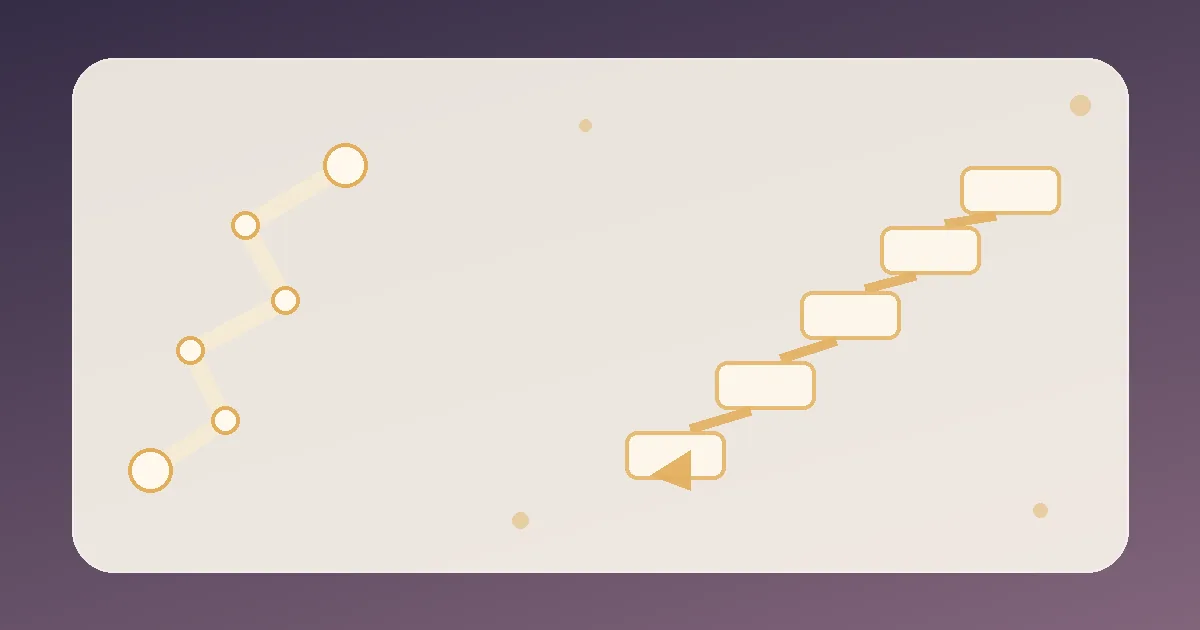
A visual path can organize the sequence of moves without turning it into a forecast.
What this situation means
A backward move in Leela is a predefined board transition, not proof that you have failed.
What to record
- Notice the theme and question first, then connect them with the original intention.
- Compare the cell you left, the cell you reached and the answer you gave before the move.
- Use the contrast to form a testable hypothesis and one reversible action rather than a negative verdict.
A concrete example
Situation: A player is examining a delayed work project. After several moves, a board transition sends them from a theme of achievement back to doubt; just before it, they postponed the deadline conversation again.
Action: Compare the cell you left, the cell you reached and the answer you gave before the move.
Check: Use the contrast to form a testable hypothesis and one reversible action rather than a negative verdict.
How to test the interpretation
- Roll once and accept the result instead of repeating until a convenient number appears.
- Notice the theme and question first, then connect them with the original intention.
- Look for cells, words, and reactions that recur across several moves.
- Define one small step within your control that can be adjusted.
What commonly goes wrong
- The symbol becomes an external verdict and uncertainty is hidden behind a confident forecast.
- Treating a cell title as a literal verdict.
- Treating a downward transition as punishment or proof of failure.
- Using board positions to rank maturity or success.
Continue exploring “Why Leela sends you backward and what to do” in Reflecta Leela: save your own response first, then use AI as an additional hypothesis rather than a ready-made decision.
Related guides
- What snakes mean in Leela
- What a repeated cell means in Leela
- What arrows mean in Leela
- Leela move history
- Why Leela rules differ
- How AI uses the full history of moves and answers in Leela
- How to formulate a Leela question about the next step
- How an AI guide creates the final Leela game summary
FAQ
Why Leela sends you backward and what to do
A backward move in Leela is a predefined board transition, not proof that you have failed. Compare the cell you left, the cell you reached and the answer you gave before the move. Use the contrast to form a testable hypothesis and one reversible action rather than a negative verdict.
Sources and editorial method
This material is intended for learning and self-reflection. It does not promise to predict the future and does not replace professional help.