Direct answer: In a two-player Leela session, each person usually keeps a separate intention, route, and right to withhold part of an answer. Players take complete turns: the owner speaks first, while the other listens and offers interpretation only after permission. The format works for friends, relatives, colleagues, and partners. Couples discussing their relationship need additional safeguards against blame and coercion.
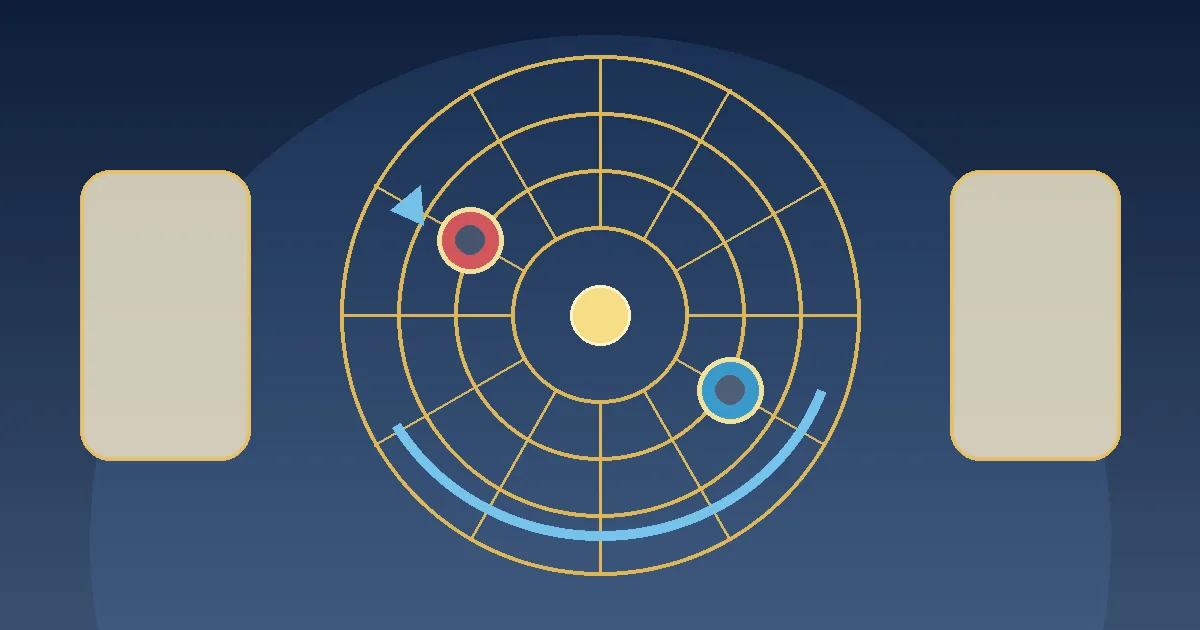
“Two players” describes the number, not the relationship
The participants may be friends, colleagues, relatives, or romantic partners. The base format therefore assumes neither a shared intention nor permission to analyze one another. Each person remains the owner of their own story.
When the intention concerns the relationship itself, use the additional safeguards in the couples guide: no accusatory interpretation, a right to keep notes private, and an easy way to stop.
Three ways to structure the session
Alternate one move at a time
The first person moves, answers, and completes the note. Then the second person takes a turn. This is the clearest arrangement for most sessions.
Alternate short blocks
Each person takes two or three moves before switching. It gives more continuity, but the waiting participant should not become an audience for half an hour.
One player, one witness
One person completes a short session while the other listens, then the roles reverse. This separates sensitive contexts but requires more time.
The listener’s role
A listener may ask: “What is the observable fact?” “How does this connect with your intention?” or “Would you like to hear my association?” They do not finish the player’s sentence or announce the “true meaning” of the cell.
Consent before commentary is a small but important boundary. It turns advice from an intrusion into requested help.
Example: two friends considering change
One participant is thinking about moving to another city; the other is considering a new professional field. Their topics look similar but remain separate. The first connects a cell about expectation with a need for family approval. The second later lands on the same cell and notices unrealistic expectations about learning speed.
The shared cell does not indicate a shared fate. One person’s next step is a concrete family conversation; the other’s is a trial course. Comparing the “depth” of their conclusions would add nothing.
Privacy without vague promises
Agree whether screens are visible, whether a shared record is kept, and whether either person may bring up an answer later. “It stays between us” is vague. “I do not repeat your answer and ask before returning to it” is clearer.
On a shared device, close personal notes before handing over the turn. Do not record audio or the screen without separate consent.
Avoid turning the game into a competition
Move count, board position, and dramatic insight do not measure success. Equality means equal access to time and boundaries, not identical routes.
Closing for two people
Each participant writes a personal conclusion and next step. Only after that may they agree on one form of support: a reminder, help gathering information, or simply no advice. A joint commitment exists only when both explicitly accept it.
Questions about this topic
Do two players need separate dice and pieces?
It depends on the board or interface. The important requirement is a clear route history for each participant.
Can both people use one intention?
Yes, for a shared task, but each person still answers in the first person. Separate intentions are safer when the aim is to prove who is right.
Must the second player help interpret a turn?
No. The default role is attentive listening. Advice or associations come only after an invitation.
How is this different from Leela for couples?
The two-player structure is relationship-neutral. The couples guide adds rules for vulnerability, conflict, blame, and safety in romantic relationships.
What if one player moves much faster?
Do not force equal move counts. Use equal time or finish a round only when both have completed a meaningful answer.
Related Leela guides
- Leela for couples: dialogue without pressure
- Leela with friends: how to organize a session
- Leela for groups: size, roles and pace
- Privacy of answers in Leela: what other players can see
- Private Leela rooms: invitations, turns and personal answers
- Why Leela rules differ
- What happens after a move in Leela
- Leela with a live facilitator: role and boundaries
FAQ
Do two players need separate dice and pieces?
It depends on the board or interface. The important requirement is a clear route history for each participant.
Can both people use one intention?
Yes, for a shared task, but each person still answers in the first person. Separate intentions are safer when the aim is to prove who is right.
Must the second player help interpret a turn?
No. The default role is attentive listening. Advice or associations come only after an invitation.
How is this different from Leela for couples?
The two-player structure is relationship-neutral. The couples guide adds rules for vulnerability, conflict, blame, and safety in romantic relationships.
What if one player moves much faster?
Do not force equal move counts. Use equal time or finish a round only when both have completed a meaningful answer.
Sources and editorial method
This material is intended for learning and self-reflection. It does not promise to predict the future and does not replace professional help.