Direct answer: There is no universal requirement to reach the final cell. Completion is useful while attention and consent remain; fatigue, pressure or an unsafe state are valid reasons to pause or stop.
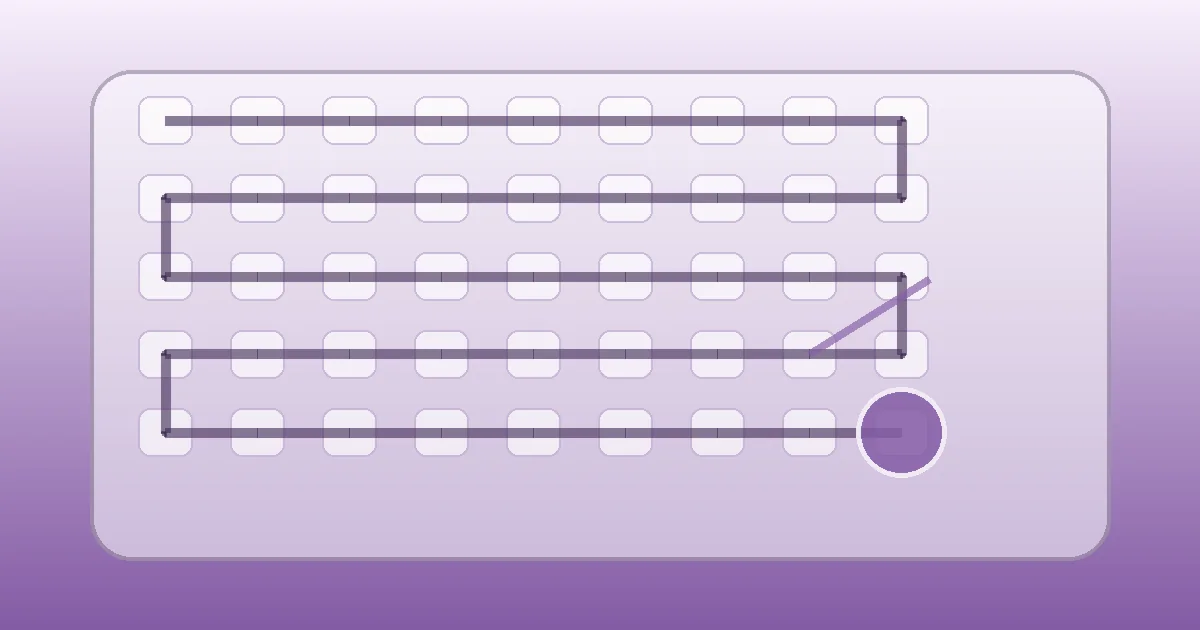
A visual map can hold the structure of reflection without turning it into a forecast.
How to choose: continue, pause or finish
Reaching the final cell is not a test of persistence. A game remains useful when the player names their condition honestly and records where the process stopped.
| Option | When it fits | What to save |
|---|---|---|
| Continue | Attention is stable, participation remains voluntary, and there is enough time to answer and record the move. | Check your level of attention and choose whether to continue, save a pause or finish with a short note. |
| Pause | Fatigue, haste or a strong emotion has appeared, but there is a clear plan to return to the saved context. | The current cell, response and reason for stopping are saved, so the game can resume without rerolling or reconstructing the context from memory. |
| Finish | The session goal has been met, circumstances have changed, or continuing no longer feels safe or useful. | The current cell, response and reason for stopping are saved, so the game can resume without rerolling or reconstructing the context from memory. |
Signals worth using
- There is no universal requirement to reach the final cell. Completion is useful while attention and consent remain; fatigue, pressure or an unsafe state are valid reasons to pause or stop.
- Check your level of attention and choose whether to continue, save a pause or finish with a short note.
- The current cell, response and reason for stopping are saved, so the game can resume without rerolling or reconstructing the context from memory.
For useful context, continue with:
- How long does a Leela game take? Pace, pauses, and session limits
- How to resume an unfinished Leela game
A concrete example
Situation: A player starts in the evening, reaches an important cell, then notices they are rereading the prompt and answering automatically. Instead of pushing toward the final cell, they save the move, write one sentence about the pause and schedule a return.
Action: Check your level of attention and choose whether to continue, save a pause or finish with a short note.
Check criterion: The current cell, response and reason for stopping are saved, so the game can resume without rerolling or reconstructing the context from memory.
How to preserve an unfinished game
- Check your level of attention and choose whether to continue, save a pause or finish with a short note.
- The current cell, response and reason for stopping are saved, so the game can resume without rerolling or reconstructing the context from memory.
- Reaching the final cell is not a test of persistence. A game remains useful when the player names their condition honestly and records where the process stopped.
Questions and answers
Do you have to complete a Leela game
There is no universal requirement to reach the final cell. Completion is useful while attention and consent remain; fatigue, pressure or an unsafe state are valid reasons to pause or stop.
Can I stop without reaching the end?
There is no universal requirement to reach the final cell. Completion is useful while attention and consent remain; fatigue, pressure or an unsafe state are valid reasons to pause or stop.
What must be recorded?
Check your level of attention and choose whether to continue, save a pause or finish with a short note.
When should I return to the note?
The current cell, response and reason for stopping are saved, so the game can resume without rerolling or reconstructing the context from memory.
Save your question and continue in Reflecta Leela; treat the AI response as an additional hypothesis, not a ready-made decision.
Related guides
- How progress is saved in online Leela
- Why Leela sends you backward and what to do
- A sudden move forward in Leela: what it means
- What a repeated cell means in Leela
- Why Leela rules differ
- Classic Leela and Reflecta Leela: format differences
FAQ
Do you have to complete a Leela game
There is no universal requirement to reach the final cell. Completion is useful while attention and consent remain; fatigue, pressure or an unsafe state are valid reasons to pause or stop.
Can I stop without reaching the end?
There is no universal requirement to reach the final cell. Completion is useful while attention and consent remain; fatigue, pressure or an unsafe state are valid reasons to pause or stop.
What must be recorded?
Check your level of attention and choose whether to continue, save a pause or finish with a short note.
When should I return to the note?
The current cell, response and reason for stopping are saved, so the game can resume without rerolling or reconstructing the context from memory.
Sources and editorial method
This material is intended for learning and self-reflection. It does not promise to predict the future and does not replace professional help.