Leela cell 63 Agency: Agency is the right to choose the next step within given circumstances. What decision do you want to acknowledge as your own? Write the decision in the first person and separate your choice from circumstances you do not control. The cell has no automatic transition or required symbolic choice.
Reflecta version: Leela cell 63 “Agency” belongs to Reflecta’s digital version; names, numbering, and transitions may differ on other Leela boards.
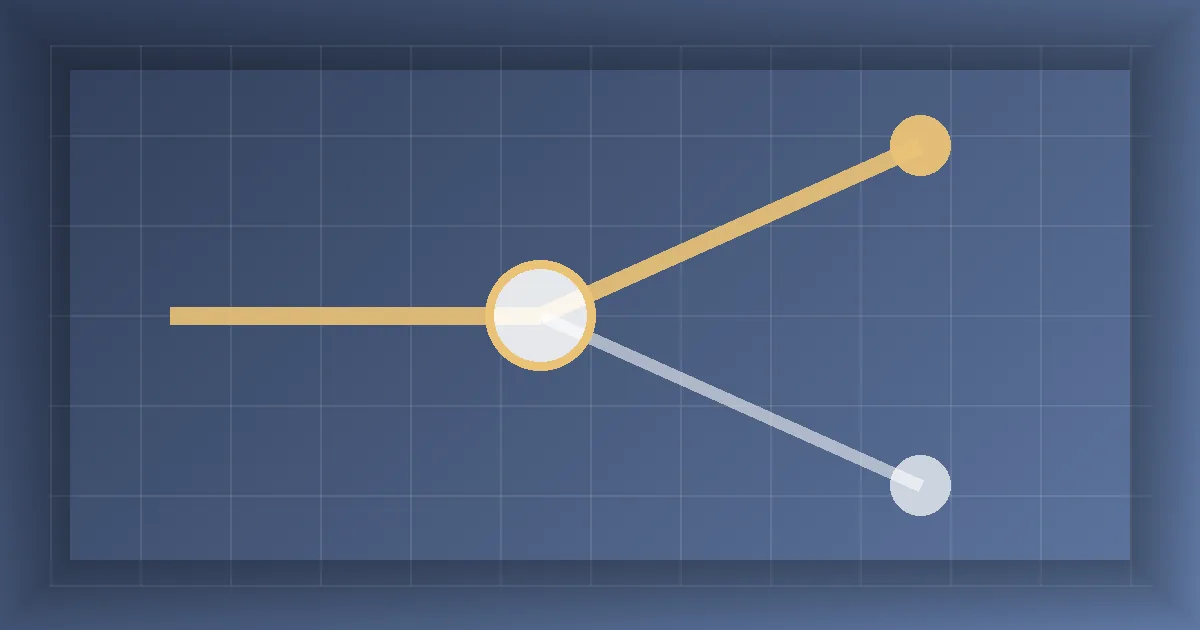
A visual path can organize the sequence of moves without turning it into a forecast.
Agency is the right to choose the next step within given circumstances
The title “Agency” names a question to examine in a concrete situation, not a ready-made conclusion about a person or the future.
Central question: What decision do you want to acknowledge as your own?
Read cell 63 together with the original intention, earlier moves, and observable facts. Keep the interpretation separate from what can be checked independently.
For context, compare this theme with: Leela board guide: cells, movement, and transitions; Leela 72 cells: reading the path without fatalism.
A concrete example
A person waits for a partner to decide whether the relationship will continue. They cannot control the other answer, but they can set a date for the conversation, state their boundary, and decide what they will do if clarity does not appear.
- Answer in your own words: What decision do you want to acknowledge as your own?
- Choose an action: Write the decision in the first person and separate your choice from circumstances you do not control.
- Set a criterion: The wording contains your own choice, a boundary of responsibility, and a next step without handing the decision to a symbol.
Where the reading becomes unreliable
- Do not turn “Agency” into a verdict, diagnosis, or universal personality label.
- Do not use cell 63 to claim what another person thinks, feels, or will inevitably do.
- Do not replace facts, direct conversation, and a testable action with a symbolic reading.
How to work with the cell
An AI facilitator can connect the answer from cell 63 with saved history, but it cannot establish that a reading is true or make the decision for the player.
- Separate the facts: List observable events, constraints, and missing information in a few lines.
- Answer in your own words: What decision do you want to acknowledge as your own?
- Choose an action: Write the decision in the first person and separate your choice from circumstances you do not control.
- Set a criterion: The wording contains your own choice, a boundary of responsibility, and a next step without handing the decision to a symbol.
What is the main mistake when reading the “Agency” cell? Treating the title as an order or a finished conclusion. Answer “What decision do you want to acknowledge as your own?” against the facts first, then test the reading by this criterion: The wording contains your own choice, a boundary of responsibility, and a next step without handing the decision to a symbol.
What the board mechanic means
The cell has no automatic transition or required symbolic choice. The mechanic describes the current version of the board: it does not prove the reading, predict the outcome, or transfer the decision from the player to a symbol.
Questions and answers
Leela cell 63 “Agency”: meaning and questions
Agency is the right to choose the next step within given circumstances. Write the decision in the first person and separate your choice from circumstances you do not control.
What is the main mistake when reading the “Agency” cell?
Treating the title as an order or a finished conclusion. Answer “What decision do you want to acknowledge as your own?” against the facts first, then test the reading by this criterion: The wording contains your own choice, a boundary of responsibility, and a next step without handing the decision to a symbol.
How can you tell whether the interpretation was useful?
The wording contains your own choice, a boundary of responsibility, and a next step without handing the decision to a symbol.
What does the transition, or its absence, mean?
The cell has no automatic transition or required symbolic choice. The mechanic describes the current version of the board: it does not prove the reading, predict the outcome, or transfer the decision from the player to a symbol.
Related guides
- Leela cell meanings: contextual interpretation without templates
- How AI uses the full history of moves and answers in Leela
- How to turn a Leela insight into a concrete next step
- How to narrow a broad Leela intention: a four-part formula
- Leela cell 69 “Commitment”: meaning and questions
- Leela cell 71 “Exit”: meaning and questions
Open Leela in Reflecta and save your own answer
FAQ
Leela cell 63 “Agency”: meaning and questions
Agency is the right to choose the next step within given circumstances. Write the decision in the first person and separate your choice from circumstances you do not control.
What is the main mistake when reading the “Agency” cell?
Treating the title as an order or a finished conclusion. Answer “What decision do you want to acknowledge as your own?” against the facts first, then test the reading by this criterion: The wording contains your own choice, a boundary of responsibility, and a next step without handing the decision to a symbol.
How can you tell whether the interpretation was useful?
The wording contains your own choice, a boundary of responsibility, and a next step without handing the decision to a symbol.
What does the transition, or its absence, mean?
The cell has no automatic transition or required symbolic choice.
Sources and editorial method
This material is intended for learning and self-reflection. It does not promise to predict the future and does not replace professional help.