Direct answer — Leela cell 28 “Anger”: Anger can signal a crossed boundary, loss, or powerlessness. What violation lies behind your anger? Separate the event, crossed boundary or loss, impulse, and acceptable action; choose one direct request or a pause that causes no harm.
Reflecta version: Leela cell 28 “Anger” belongs to Reflecta’s digital version; names, numbering, and transitions may differ on other Leela boards.
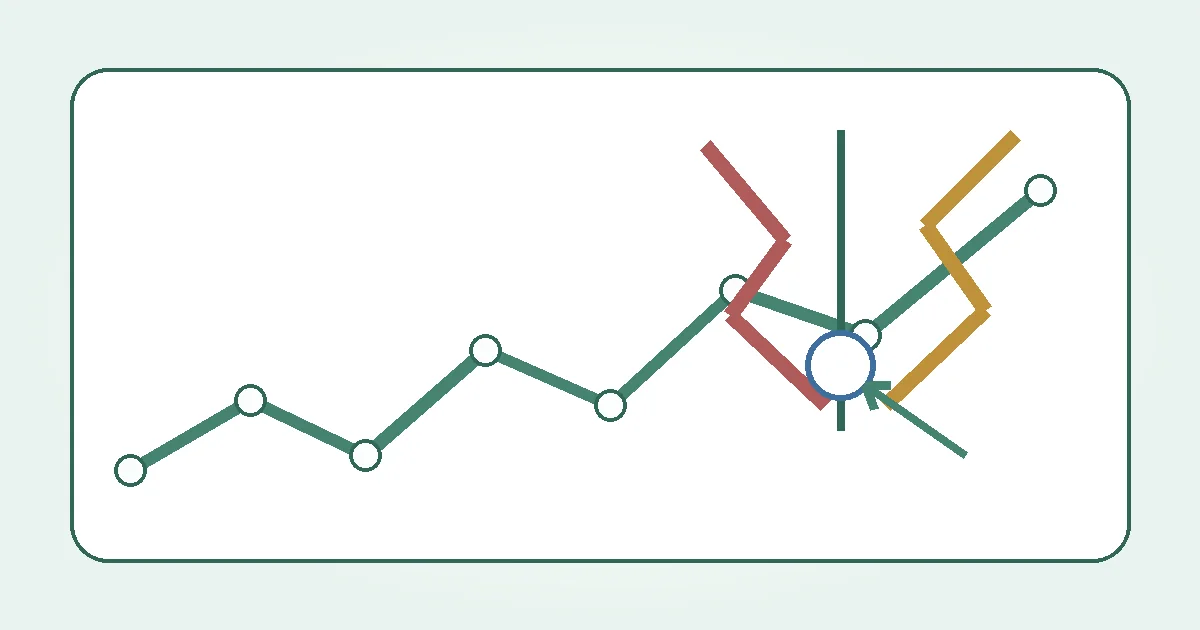
A visual path can organize the sequence of moves without turning it into a forecast.
Leela cell 28 “Anger”: how to turn energy into a boundary without harm
Anger can signal a perceived violation, loss, injustice or powerlessness, but it does not prove one interpretation and does not authorize harm. A useful review separates the event, the crossed boundary, the impulse and an acceptable response.
What to separate
| Aspect | How to use it in your note |
|---|---|
| Event | The specific action, refusal or loss that occurred. |
| Boundary or value | What was crossed, threatened or taken away. |
| Impulse | What you want to do immediately and what consequences it could create. |
| Acceptable response | Which request, pause, distance or consequence protects without harm. |
Worked example: Anger
A housemate uses the player’s laptop for a second time without permission. The first impulse is to shout and threaten, but the player pauses, records the fact and states the boundary: the device cannot be used without explicit consent. They ask for it back now and agree on a rule for the future; if it happens again, the laptop will be stored separately. Anger revealed a violation without becoming a license for aggression.
A practical way to work with the cell
- Fix the context — Anger can signal a crossed boundary, loss, or powerlessness. Read it together with the intention, the events before the move and the answers already recorded. Write your own response before opening an AI interpretation.
- Answer the question — What violation lies behind your anger?
- Choose an action — Separate the event, crossed boundary or loss, impulse, and acceptable action; choose one direct request or a pause that causes no harm.
- Set a check — the specific event and boundary are named, the intense impulse is separated from action, and the response protects the interest without threats, humiliation or physical harm.
What to record
- What exact fact triggered the anger, and what did I add about motives?
- Which boundary, loss or value sits beneath the reaction?
- Which response will protect me and still be acceptable after the emotion falls?
For the wider game context, see What to do when Leela brings up strong emotions.
An important qualification
Anger does not have to be suppressed, but its expression is limited by safety. If there is a risk of physical harm, violence or loss of control, stop the argument, leave the dangerous setting and seek appropriate help.
Misreadings that weaken the result
- treating the strength of anger as proof of being right and shifting from protection into punishment, threats or humiliation.
- repeating the move until a more pleasant interpretation appears.
- using the cell to guess another person’s hidden motives.
- copying the AI summary before writing your own answer.
On the current Reflecta board, this cell does not change position automatically. An optional symbolic tool is available after your own answer. A movement or extra option on the Reflecta board is a rule of this version, not proof that the same outcome will occur in life.
Questions and answers
What if the anger is too intense for a conversation?
Create distance, stop the argument and take a safe pause first. Return only after the intensity falls; when violence is possible, safety and outside help take priority.
What can the AI guide add?
AI can compare the response to the “Anger” theme with earlier moves, point out a contradiction and ask a clarifying question. It cannot verify unrecorded facts or decide for the player.
If I am angry, does it mean I was treated wrongly?
Not necessarily. Anger matters as a signal, but the situation still needs to be checked against facts, agreements and alternatives. Sometimes a boundary was crossed; sometimes an expectation was never agreed.
Does this cell predict what will happen?
No. The “Anger” cell can help form a hypothesis, but it does not reveal another person’s thoughts or prove an inevitable future.
Related Leela guides
Use the following guides to place this cell in the wider logic of the game:
- What to do when Leela brings up strong emotions
- How to formulate a Leela question about personal boundaries
- How to formulate a Leela question about recurring conflicts
- Leela board guide: cells, movement, and transitions
- Leela 72 cells: reading the path without fatalism
- Leela cell meanings: contextual interpretation without templates
- Leela cell 39 “Forgiveness”: meaning and questions
- Leela cell 40 “Repetition”: meaning and questions
Save your note and continue in Reflecta Leela. Treat the AI response as a hypothesis to test, not as a decision made for you.
FAQ
If I am angry, does it mean I was treated wrongly?
Not necessarily. Anger matters as a signal, but the situation still needs to be checked against facts, agreements and alternatives. Sometimes a boundary was crossed; sometimes an expectation was never agreed.
What if the anger is too intense for a conversation?
Create distance, stop the argument and take a safe pause first. Return only after the intensity falls; when violence is possible, safety and outside help take priority.
Does this cell predict what will happen?
No. The “Anger” cell can help form a hypothesis, but it does not reveal another person’s thoughts or prove an inevitable future.
What can the AI guide add?
AI can compare the response to the “Anger” theme with earlier moves, point out a contradiction and ask a clarifying question. It cannot verify unrecorded facts or decide for the player.
Sources and editorial method
This material is intended for learning and self-reflection. It does not promise to predict the future and does not replace professional help.