Direct answer — Leela cell 23 “Exchange”: Examine the balance of giving, receiving, and unspoken expectations. What are you giving in hopes of receiving without an explicit agreement? Create three columns: what you give, what you expect, and what was actually agreed; state one hidden expectation directly.
Reflecta version: Leela cell 23 “Exchange” belongs to Reflecta’s digital version; names, numbering, and transitions may differ on other Leela boards.
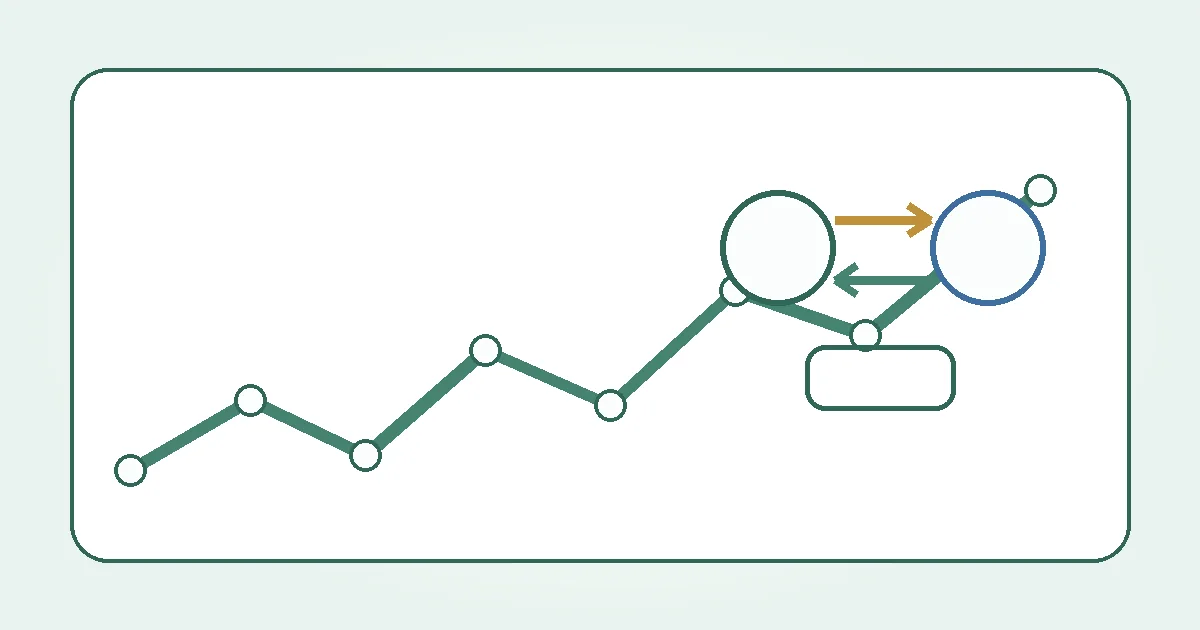
A visual path can organize the sequence of moves without turning it into a forecast.
Possible sources: Exchange
Exchange includes money, time, help, attention, and emotional labour. Tension grows when a contribution is called a gift but silently becomes a debt. Distinguish a voluntary gift, a direct request, an explicit agreement, and an expectation the other person may never have known about.
| Aspect | How to use it in your note |
|---|---|
| What I give | The time, money, attention, work, or access that I actually provide. |
| What was agreed | The reciprocity, timing, and responsibility that were stated explicitly. |
| What I expect | The response I treat as obvious although it was never discussed. |
| Renegotiation | The request, boundary, or new form of exchange that now needs agreement. |
Worked example: Leela cell 23 “Exchange”
An employee has covered colleagues’ shifts for months, expecting them to support his promotion. Nobody agreed to this, and their refusal produces strong resentment. He separates the facts: the shifts were voluntary, no promise of support was made, and the expectation existed only in his mind. He then asks directly whether they are willing to recommend him and stops taking extra shifts without a separate agreement.
Three questions that deepen the answer
- What do I call a gift while privately expecting a return?
- Which part of reciprocity was actually agreed?
- How can I turn the hidden expectation into a direct request without declaring a debt?
A practical way to work with the cell
- Fix the context — Examine the balance of giving, receiving, and unspoken expectations. Read it together with the intention, the events before the move and the answers already recorded. Write your own response before opening an AI interpretation.
- Answer the question — What are you giving in hopes of receiving without an explicit agreement?
- Set a check — each contribution is classified as a gift, request, or agreement, the hidden expectation is stated directly, and future participation can be revised after the other side responds.
- Choose an action — Create three columns: what you give, what you expect, and what was actually agreed; state one hidden expectation directly.
Practical step: Create three columns: what you give, what you expect, and what was actually agreed; state one hidden expectation directly.
An important qualification
With a strong power imbalance, a “voluntary” exchange may be coerced. At work, in finances, and in close relationships, check whether refusal is genuinely safe and what consequences follow; reflection alone is not enough where exploitation is present.
For the wider game context, see Leela board guide: cells, movement, and transitions.
How to check the interpretation
Check: the interpretation is useful when each contribution is classified as a gift, request, or agreement, the hidden expectation is stated directly, and future participation can be revised after the other side responds.
- calling a hidden contract generosity and then treating refusal as proof of ingratitude or betrayal.
- using the cell to guess another person’s hidden motives.
- turning “Exchange” into a permanent personality label.
- copying the AI summary before writing your own answer.
On the current Reflecta board, this cell does not change position automatically; the work happens through the player’s own answer. A movement or extra option on the Reflecta board is a rule of this version, not proof that the same outcome will occur in life.
Questions and answers
Does a fair exchange have to be exactly equal?
No. Voluntariness, clarity, and acceptability matter more. Contributions may differ in form and timing when expectations are agreed and nobody is held by a hidden debt.
Can you ask for help in return after you have already given a lot?
Yes, but it is a new request rather than an automatic debt if reciprocity was not agreed in advance. The other person may decline, and you may change what you offer in the future.
What can the AI guide add?
AI can compare the response to the “Exchange” theme with earlier moves, point out a contradiction and ask a clarifying question. It cannot verify unrecorded facts or decide for the player.
Does this cell predict what will happen?
No. The “Exchange” cell can help form a hypothesis, but it does not reveal another person’s thoughts or prove an inevitable future.
Related Leela guides
Use the following guides to place this cell in the wider logic of the game:
- Leela for couples: dialogue without pressure
- How to formulate a Leela question about relationships
- How to formulate a Leela question about personal boundaries
- Leela board guide: cells, movement, and transitions
- Leela 72 cells: reading the path without fatalism
- Leela cell meanings: contextual interpretation without templates
- Leela cell 31 “Curiosity”: meaning and questions
- Leela cell 32 “Acceptance”: meaning and questions
Save your note and continue in Reflecta Leela. Treat the AI response as a hypothesis to test, not as a decision made for you.
FAQ
Does a fair exchange have to be exactly equal?
No. Voluntariness, clarity, and acceptability matter more. Contributions may differ in form and timing when expectations are agreed and nobody is held by a hidden debt.
Can you ask for help in return after you have already given a lot?
Yes, but it is a new request rather than an automatic debt if reciprocity was not agreed in advance. The other person may decline, and you may change what you offer in the future.
Does this cell predict what will happen?
No. The “Exchange” cell can help form a hypothesis, but it does not reveal another person’s thoughts or prove an inevitable future.
What can the AI guide add?
AI can compare the response to the “Exchange” theme with earlier moves, point out a contradiction and ask a clarifying question. It cannot verify unrecorded facts or decide for the player.
Sources and editorial method
This material is intended for learning and self-reflection. It does not promise to predict the future and does not replace professional help.